Do 75 Percent of Data Breaches Really Come from Insiders?
There’s a lot of information out there on data breaches. I’ve written before about one source that I trust: the Verizon Data Breach Report …
Read More
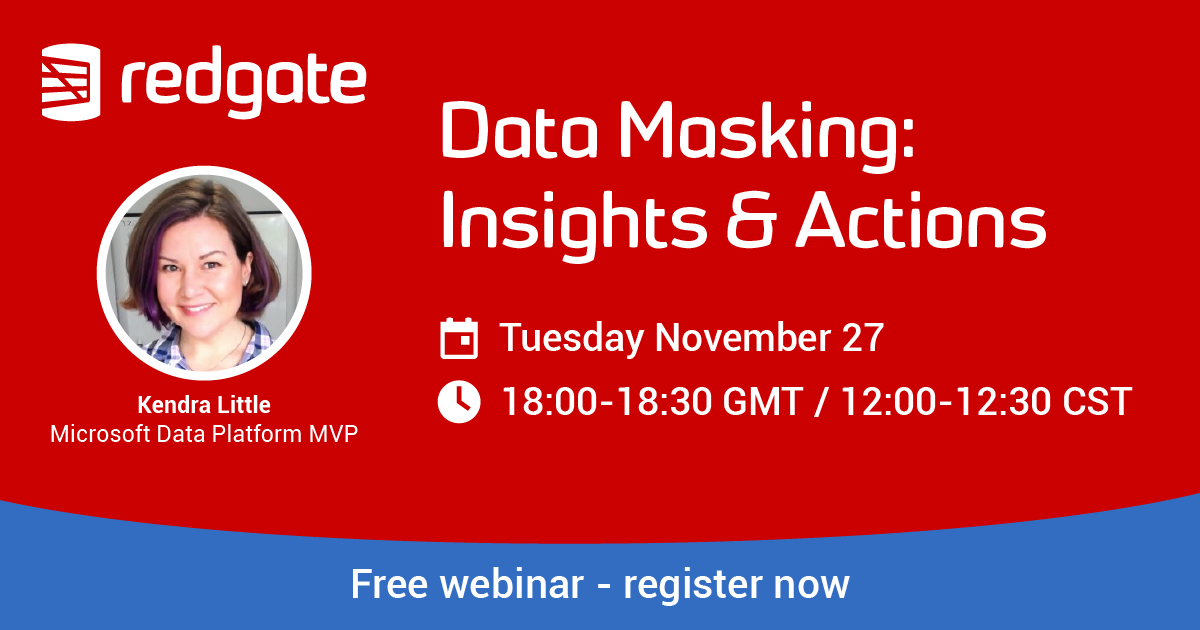
Click the image to register for the webcast
In a recent Harris poll sponsored by the payment company Stripe, over 1,000 C-level executives were asked to rate which factors they feel are most threatening to their business.
The #1 item that executives rated as “somewhat” or “very” threatening to the success of their business is security / data breaches. The #2 rated threat to these businesses? Increased regulation.
One of my very first jobs when I began in IT was to build out environments for developer and test teams at a software development company. At first, we didn’t mask any of this data. After problems arose, we began masking only a single field. That was a huge mistake.
In this upcoming free webcast, I’ll share the following in just 30 minutes:
Whether or not you are an IT leader, a developer, or a DBA, right now you have a huge opportunity to make a difference for your organization, your customers, and your own career by championing privacy.
Yep, your own career! Those top two C-level concerns mentioned at the beginning of this post means that initiating projects like data masking and seeing them through from proof-of-concept to implementation is a big resume-building career move. That’s true whether you choose a Redgate solution, or use the information in this webinar to go a different route.
Join me in this upcoming webinar to learn the initial steps that you can make to instigate changes in your company: and to help mitigate the top risks that are keeping C-level executives up at night.



Copyright (c) 2025, Catalyze SQL, LLC; all rights reserved. Opinions expressed on this site are solely those of Kendra Little of Catalyze SQL, LLC. Content policy: Short excerpts of blog posts (3 sentences) may be republished, but longer excerpts and artwork cannot be shared without explicit permission.