I’m working on a project where it’s useful to automate environment setup and teardown for testing some devops deployment scenarios for databases using transactional replication.
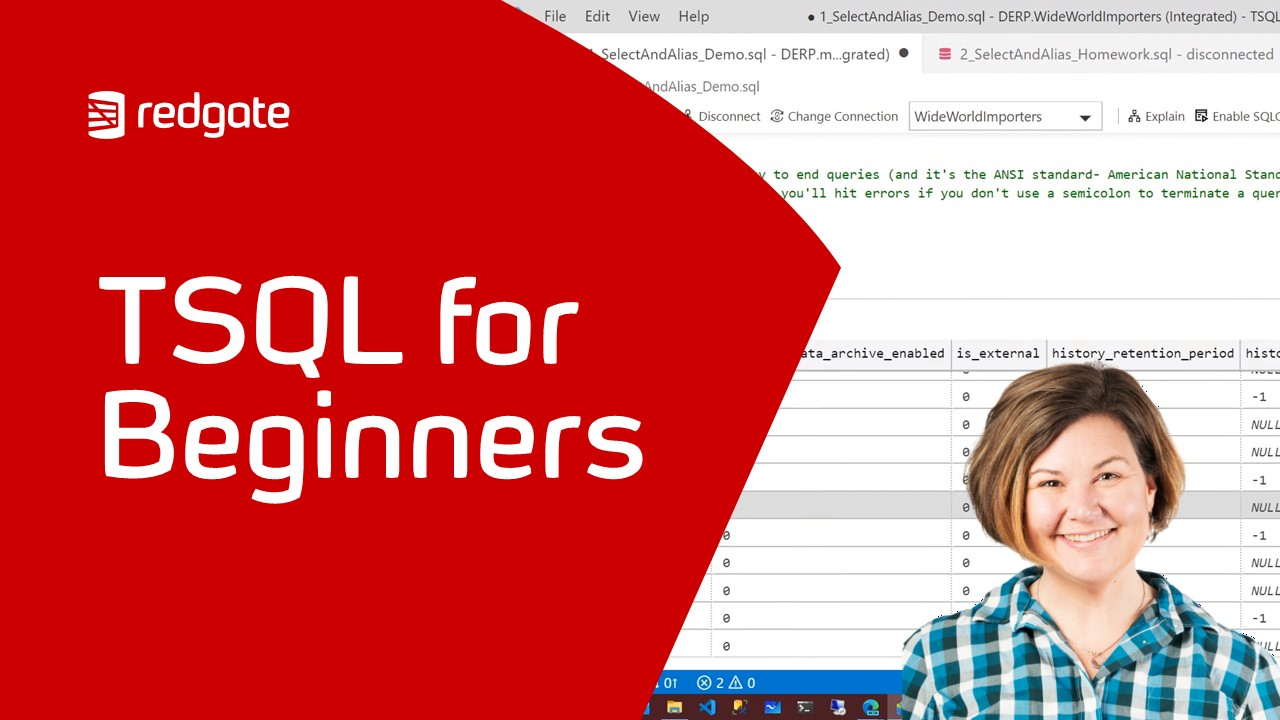
Thanks to the support of Redgate, I’ve launched a new course which teaches you the basics of T-SQL. The course is totally free, no logins required: we don’t even ask for the email address.
Each week has an embedded video for the course, along with a link to the syllabus and scripts. The videos also have a timeline in case you wish to jump to a particular part of the discussion.
When I first began working with databases, I was lucky to land a job at a little start-up which had solid development and operations processes: all our code, including database code, was in version control. We had a strong database architect who instilled good coding practices into the way we managed database code as well: code was expected to be reusable whenever possible.
We’ve got a session coming up in the free Redgate Streamed virtual conference on, “How database DevOps levels up remote work.” When thinking about that session I began thinking about other ways to improve remote work.
While I worked remotely for nearly ten years until recently and have established practices which work well for me , moving to another country and the general chaos and uncertainty right now as the world tries to cope with a global pandemic have increased my feelings of worry and loneliness.
I love talking about index tuning and I know this area well, so I’m excited to put together this new session. I thought it would be fun to share my process of outlining and creating the session, leading up to the event.
Copyright (c) 2025, Catalyze SQL, LLC; all rights reserved. Opinions expressed on this site are solely those of Kendra Little of Catalyze SQL, LLC. Content policy: Short excerpts of blog posts (3 sentences) may be republished, but longer excerpts and artwork cannot be shared without explicit permission.